Look, food insecurity isn't some abstract concept you read about in reports. Walk through any city and you'll see it right there—veterans holding cardboard signs, elderly neighbors who haven't had a real conversation in days, families stretched so impossibly thin that choosing between groceries and rent isn't even a choice anymore. We've been trying to help for years, I know that. But honestly? Something's been missing. You write a check, it vanishes into some system somewhere, and you never actually see where it lands or whose life it touches. That gap between giving and impact—that's what meal sharing programs are trying to close.
The tukr box® model just... it does something different, you know? It's about creating actual human connection through the most basic act there is: sharing a home-cooked meal. No big institutional kitchens, no forms to fill out, no invisible wall between the person helping and the person being helped. Just neighbors helping neighbors with real food that matters.
The Problem With How We've Been Doing Things
Here's the thing about most hunger relief programs—they keep you at arm's length. You send money, feel better for a minute, then get on with your day. The organizations do important work, don't get me wrong, but you stay completely removed from any real impact. Research shows pretty clearly that this distance ends up hurting both sides—givers lose interest over time, and people receiving help don't feel the dignity they deserve.
Community food programs have mostly stuck with institutional setups. Soup kitchens serve a purpose, sure, but there's something deeply off about standing in line for mass-produced food that tastes like cafeteria leftovers. People get fed, technically speaking, but they're not treated like actual individuals with preferences or stories or value beyond just being hungry.
And then you've got the targeting issue. So many programs cast these huge nets but somehow miss specific groups falling through the cracks. Homeless veterans deal with their own unique mess—PTSD, disabilities from service, trying to navigate the VA system which is... well, it's a nightmare. They served their country and came home to struggle. How is that right? Elderly folks living alone often face food insecurity quietly, too proud or too isolated to ask traditional programs for help. These people need specialized attention that generic hunger relief just can't give them.

How tukr box® Meal Sharing Kits Actually Work
The system's almost embarrassingly simple, which honestly is why it works. You buy a tukr box® meal kit with everything you need for a gourmet pasta meal—good quality penne, premium marinara sauce from Marry Me Marinara, to-go containers. The kit gives you enough for your own dinner plus one or two extra servings to share.
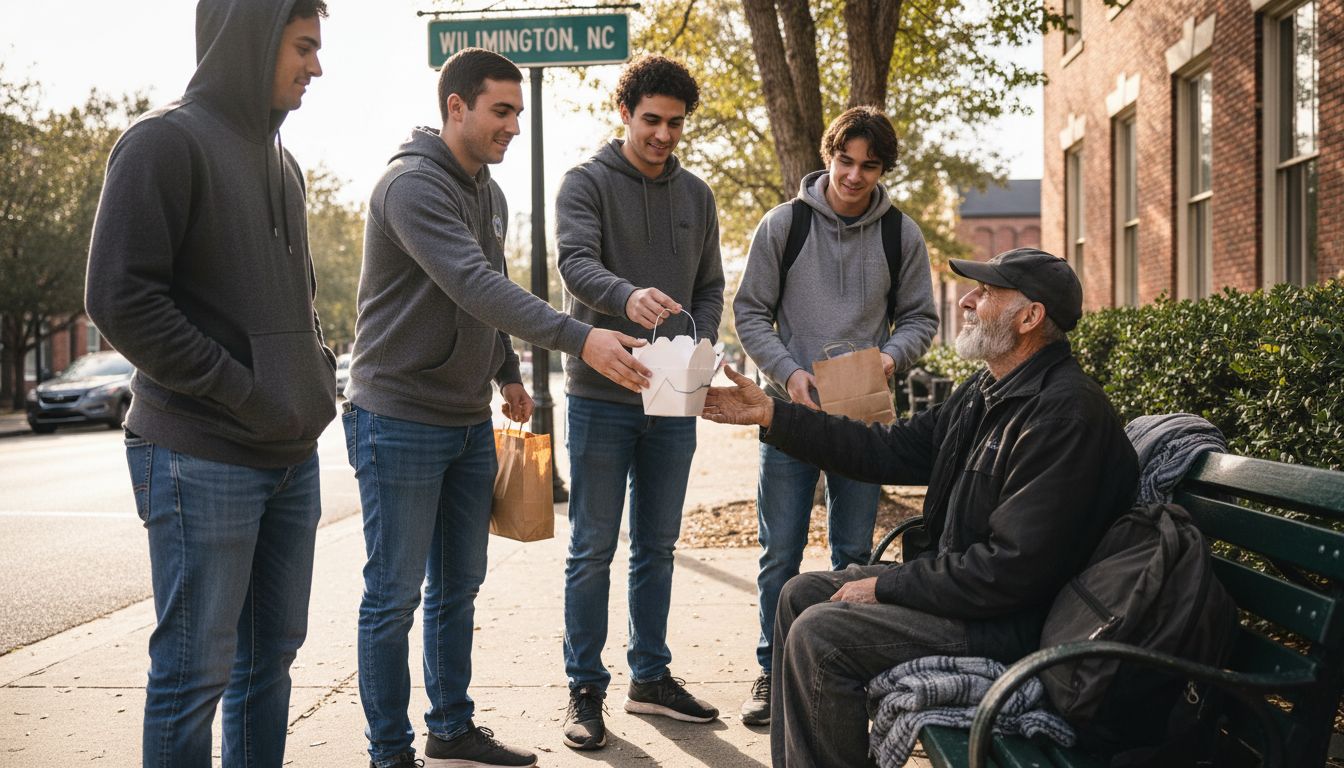
You cook the meal for yourself and your family with the same ingredients. This isn't about making separate "charity food" that's somehow lesser quality. It's the exact same meal you're eating, made with the same care. While you're cooking, you pack an extra portion into the container they give you. Then comes what really matters: you personally hand that fresh, hot meal to someone who needs it—maybe that veteran you see every day, an elderly neighbor, someone experiencing homelessness, whoever's in your area and struggling.
That face-to-face moment? It changes everything. You're not dropping off leftovers or sending money to some faceless charity. You're looking another person in the eye, sharing something you literally just cooked, maybe having a conversation or just a meaningful look, and creating real connection that helps both of you.
The model works because it kills all the usual excuses people make. Don't know what to cook? Already decided. Not sure about portions? Pre-measured. No containers? They're included. Worried about how to approach people? The platform hooks you up with other volunteers and gives you guidance on doing it respectfully and safely.
Why Direct Connection Beats Everything Else
Money creates transactions. Food creates relationships. This isn't just feel-good talk—it matters when you're dealing with something as complicated as homelessness or hunger, which are really about broken connections. Connections to resources, to community, to society, to basic human dignity.
Hand someone cash and they might buy food or they might not. Either way, you're done in thirty seconds. But share a home-cooked meal? That opens doors. You learn names. You hear actual stories. The veteran stops being just "some homeless guy" and becomes Tom who served in Iraq. The elderly woman becomes Margaret who taught elementary school for four decades. They stop being categories—"homeless," "elderly," "poor"—and turn into people. Your neighbors. Members of your community who happen to be going through a rough time right now.
Research on helping the homeless backs this up consistently. Personal interaction makes everything more effective and sustainable. People receiving help report feeling valued when there's actual human connection instead of institutional distance. People giving help stick with it longer when they see real impact instead of just statistics.
There's this dignity thing too. Getting a fresh, quality meal that someone just made specifically for you sends a completely different message than institutional food or handouts. It says "you deserve good things" instead of "here's what I can spare." That psychological shift ripples through everything—how people see themselves, how they deal with their situation, whether they keep any hope that things might get better.
The Science Behind Why Meal Sharing Creates Lasting Impact
Neuroscience backs this up in really interesting ways. When you do acts of direct kindness—especially ones that take personal effort and face-to-face interaction—your brain releases dopamine, serotonin, and oxytocin. These aren't just feel-good chemicals, they're literally the biological foundation of bonding, happiness, and genuine wellbeing. The "helper's high" people talk about? Not marketing fluff. It's actual measurable brain chemistry making you happier and more connected to your community.
The effect gets stronger with personal, direct helping compared to writing checks. Studies tracking charitable giving show that people who volunteer directly report way higher life satisfaction than those who only donate money, even accounting for income and time. The physical act of making food and sharing it face-to-face really maximizes this whole thing.
For people receiving the meals, being seen and valued as individuals instead of statistics has real psychological benefits. Food insecurity usually comes bundled with shame, isolation, and feeling worthless. When someone takes time to make a quality meal and bring it personally, that fights back against the isolation. It proves in a concrete way that someone cares, someone sees them, someone thinks they matter enough to put in actual effort.
The tukr box® "For Zero Profit" Model Changes The Game
Traditional nonprofits have this structural problem nobody really wants to talk about openly. Many of them spend 30-50% of donations on administrative costs, executive salaries, nice offices, operational overhead. Money comes in, some impact goes out, but a huge chunk just disappears into keeping the organization running.
tukr box® runs differently with what they call "for zero profit"—it's technically a for-profit company but commits 90% of all revenue straight to mission work. Meals, equipment, supplies, warehousing, distribution—the actual work of getting food to people. Only 10% goes to overhead, which is radically leaner than typical nonprofit setups.
This setup has real advantages. For-profit companies can move fast, innovate without waiting for endless board approvals, and keep financial transparency that nonprofits sometimes hide. When companies sponsor tukr box®, they get clear business benefits—brand visibility, marketing exposure, community goodwill—that make the relationship work for both sides and stay sustainable instead of being purely charity. Sponsors can write off payments as business expenses under regular tax rules, making it simple and repeatable.
The model also dodges donor fatigue. People get exhausted being constantly asked for money, especially when they never see any results. But tukr box meal sharing kits for the homeless aren't about begging for donations. You're buying a product that serves you (dinner) and serves your community (shared meals) at the same time. The value exchange feels balanced instead of one-sided, which keeps people participating long-term.
Real Community Food Programs Start With Real People
The stories coming out of communities using tukr box® show patterns that raw data just can't capture. Mark from Long Island bought several kits and started regularly sharing meals with men experiencing homelessness in his area. Those first awkward food handoffs turned into actual friendships. He knows their names now, their backgrounds, what they're working on. The meals became entry points to real relationships.
Kim in Baltimore used the kits as teaching moments with her kids. They cooked together, talked about why sharing matters, then brought a meal to their elderly neighbor who lives alone. The neighbor was overwhelmed, yeah, but Kim's kids learned something that'll stick with them forever—that caring for others isn't optional or extra, it's just how you build communities worth living in. They learned that the lady next door isn't just "some old person"—she's a human who needs connection like everyone else.
Mathilda in Wilmington got her first tukr box® and shared a meal with her neighbor in her eighties. She called it "what a gift" and "what a joy." Notice the words—not "I did a good deed" but "what a gift." Because that's what connection is, right? It's a gift to both people. The person getting the meal receives food and company. The person sharing gets the deep satisfaction of actually making a difference, of seeing someone's face light up, of breaking through the loneliness affecting so many of us.
These aren't special cases. They're typical of what happens when you remove barriers between people and create structured chances for connection through food. The meals open doors to relationships that last way beyond any single dinner.
Strategic Focus on Forgotten Populations
tukr box® specifically targets homeless veterans and elderly neighbors because these groups face unique problems that generic programs often miss. Veterans experiencing homelessness deal with PTSD, disabilities, trouble navigating bureaucratic VA systems, and the psychological weight of having served their country only to end up struggling. They need specialized support that recognizes their specific situation.
The elderly population living in isolation faces food insecurity that's mostly invisible. They're too proud to ask for help, too isolated to know where help exists, too forgotten by programs focused on younger people. An elderly person can go days or weeks without meaningful human interaction, which makes both physical and mental health problems worse. A tukr box® meal isn't just calories for them—it's proof that someone remembers they exist, that they still matter, that their community hasn't completely abandoned them.
By focusing on these specific groups, tukr box® creates targeted impact instead of scattered charity. Resources go where they're most needed, and the meal-sharing approach naturally creates the kind of personal attention these populations especially benefit from.
The Multiplier Effect on Communities
Individual meals matter, but the cumulative effect transforms whole neighborhoods. When multiple people in a community start using tukr box meal sharing kits for the homeless and isolated, the culture starts shifting. That veteran on the corner isn't just someone everyone walks past anymore—he's Tom, and several neighbors bring him meals regularly. The elderly widow two doors down isn't forgotten—she knows people check in.
These small changes build into bigger ones. Kids growing up in families that regularly share meals learn that helping others is normal, not some special occasion thing. They develop empathy through direct experience instead of abstract lessons. They see people struggling with homelessness as individuals with names and stories instead of problems to solve or ignore.
For people receiving regular meals from community members, the consistency itself provides stability. They know certain people will show up. That predictability matters hugely when everything else feels chaotic and uncertain. It builds trust, creates safety, and gives foundation for tackling bigger issues like housing, jobs, and healthcare.
The platform piece amplifies this by connecting individual volunteers into coordinated community efforts. People can join groups, go to organized meal distributions, get training materials, share strategies, and support each other's ongoing giving. What starts as individual action grows into collective impact without losing the personal touch that makes it work.
Common Mistakes To Avoid When Starting Meal Sharing
The process seems simple—cook food, share it—but there are ways to screw it up that undermine the whole point. First mistake: treating people like objects of pity instead of fellow humans. The person getting your meal isn't a problem to fix or a charity case. They're someone whose circumstances currently differ from yours but who deserves the same respect, dignity, and quality.
Second mistake: being inconsistent. Sharing meals once feels good but doesn't build the relationships that create real impact. If you're gonna start, commit to some regular schedule—weekly, every other week, monthly, whatever you can actually sustain. The reliability matters more than how often you do it.
Third mistake: forgetting food safety basics. The meal should be fresh and hot, made in clean conditions, stored right if there's any delay before you deliver it. Don't share food you wouldn't eat yourself. Don't let stuff sit unrefrigerated for hours. Basic food safety rules still apply even when kindness is the goal.
Fourth mistake: approaching people without respecting their space and boundaries. Not everyone wants to chat. Some people just want the meal and to be left alone, and that's completely okay. Read the situation. Offer the food respectfully. Don't force conversation or make getting the meal dependent on them engaging with you. The food is the gift—connection might happen naturally, but it shouldn't be required.
Fifth mistake: using meal sharing as a chance to preach, convert, or push your worldview. If someone's hungry, feed them. Period. Don't attach conditions, don't make them listen to religious messages, don't use their vulnerability to advance your agenda. The meal itself communicates care and dignity. That's enough.
What Happens When Meal Sharing Goes Wrong
Screwing up meal sharing programs can actually cause harm, which is why structure and guidance matter. When people share contaminated food or food that's been sitting around too long, they risk making people sick. People experiencing homelessness already face way more health vulnerabilities—the last thing they need is food poisoning from well-intentioned but badly executed help.
When meal sharing happens without any regard for dignity, it reinforces the exact power dynamics it should be disrupting. Tossing food at someone from your car window, leaving meals on the ground, treating food distribution like you're feeding animals instead of serving humans—these approaches make the dehumanization people experiencing homelessness already face even worse.
Inconsistent or unreliable meal sharing creates problems too. If someone starts depending on regular meals from volunteers and then those volunteers just disappear without warning, that's destabilizing. Better not to start than to start and stop unpredictably.
Using meal sharing as leverage—making food conditional on behavior changes, religious participation, or other requirements—turns generosity into manipulation. It tells people they're not worthy of basic care unless they perform according to someone else's standards. That's the opposite of dignity.
The tukr box® model addresses these pitfalls through structure. The kits ensure food safety through quality ingredients and proper containers. The platform gives training on approaching people respectfully. The community aspect helps volunteers stay consistent. The philosophy explicitly centers dignity and human connection instead of charity or conversion.
Measuring Success Beyond Numbers
Traditional hunger relief programs measure impact through meals served, people fed, pounds of food distributed. These numbers matter, but they miss the deeper transformation that effective meal sharing creates.
Real impact shows up in relationships formed. In veterans who reconnect with community after years of isolation. In elderly neighbors who start looking forward to Thursdays because they know someone's visiting. In kids who grow up believing that caring for others is just what people do. In neighborhoods where people know each other's names and look out for each other across different economic situations.
The success of tukr box® isn't just how many meals get shared—though that matters—it's how many people rediscover their ability to connect. How many volunteers say they feel more purposeful, more grounded, happier. How many people receiving meals say they feel seen for the first time in months or years. The slow cultural shift from "every person for themselves" toward "we're all in this together."
Those outcomes are harder to measure but infinitely more valuable than spreadsheet numbers. They represent the actual change we claim to want when talking about hunger and homelessness for veterans—not just feeding people but restoring their place in community, their sense of worth, their connection to the social fabric we all depend on.
The Invitation To Act
Reading about meal sharing isn't the same as doing it. Understanding the model intellectually doesn't create the experiences that change you. The challenge is simple: stop reading and start cooking.
Order one tukr box® kit. Make the meal. Share it with someone in your community who needs it. Notice how it feels—the nervousness beforehand, the actual interaction, the satisfaction after. Notice what you learn about yourself, about your community, about the person you're sharing with.
One meal won't solve homelessness or eliminate food insecurity. But it'll crack open something important—the realization that you can help directly, that connection matters more than money, that the distance between you and people struggling is smaller than you thought.
That realization changes everything. Once you experience it, the question stops being "should I help?" and becomes "how can I help regularly?" The meals become habits. The habits become relationships. The relationships become community. And community—real, functioning, caring community—addresses immediate hunger and builds long-term solutions to the systemic problems creating it.
Meal sharing works because it's human-scale, repeatable, dignified, and built around connection instead of charity. The tukr box® model makes it accessible, structured, and sustainable. The impact shows up in individuals and communities transformed not by huge programs but by thousands of small moments where someone made dinner and shared it.
That's how you actually help people—one meal, one person, one moment of connection at a time.
Learn more about Hygiene Care Kits for the Homeless